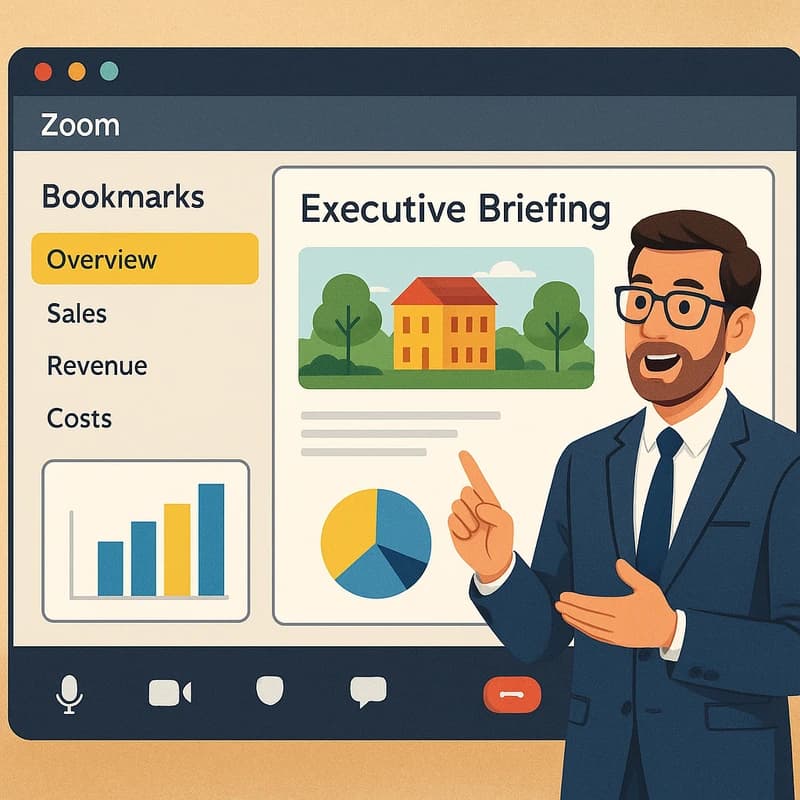
Blanked out during presentation what to do? Learn a proven 60-second reset with BLUF, a clarifying question, and one decisive next step to regain trust.
Quick Answer
If you blanked out during presentation what to do, deploy a 60‑second reset. Start with BLUF (Bottom Line Up Front), ask a clarifying question to buy thinking time, show a quick Wayfinder slide for orientation, pull one concrete decision or next step, and transition back to the main flow. It’s a crisp, credible restart you can execute in under a minute.
Key takeaway: A tightly scripted reset lets you regain control, preserve status, and keep executives focused on outcomes—not the stumble.
Complete Guide to How to recover in real time when you blanked out during presentation what to do
In high-stakes executive briefings, a blank moment doesn’t have to derail your impact. The core idea is a repeatable playbook you can sprint through in real time, without apologizing or over‑explaining. The 60‑second reset plan blends clarity (BLUF), inquiry (clarifying questions), visibility (Wayfinder slides), and decisiveness (one clear next step) to preserve credibility and pace.
-
The 60‑second reset framework in practice
-
BLUF first: deliver the essential takeaway before you spin into details.
-
Buy thinking time: a single clarifying question buys you 5–10 seconds for mental reset.
-
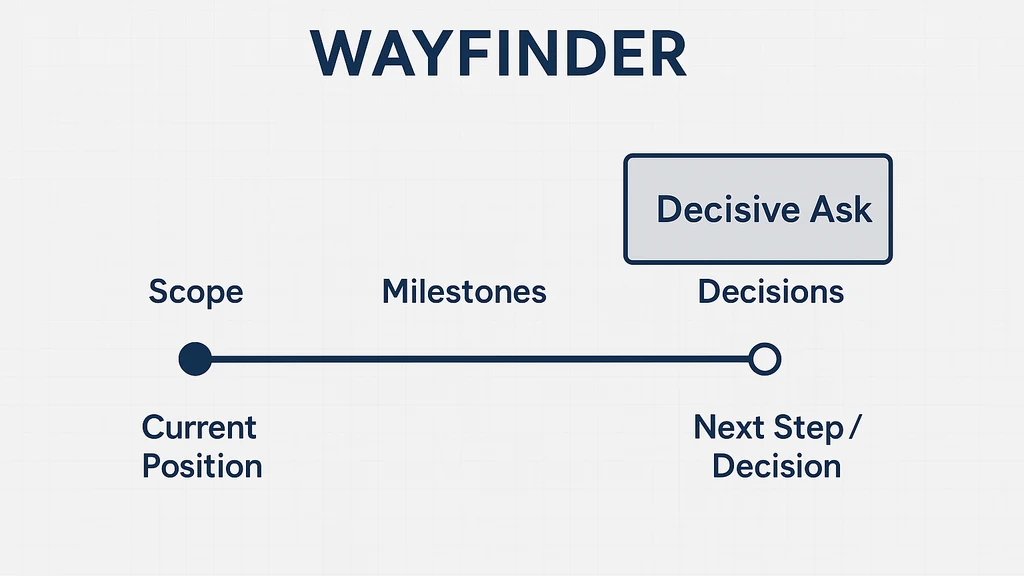
Visual anchor: a short Wayfinder slide gives executives a mental map of where you are and where you’re going.
-
One decision, one moment: extract a concrete ask, even if it’s provisional.
-
Smooth transition: loop back to primary flow with a succinct wrap.
-
-
Micro‑buffers you can preload in every deck
- Wayfinder slide per section: a simple map that shows scope, milestones, and decisions.
- Executive summary card: a one‑pager you can jump to in a flash.
- A one‑liner for the opener and a one‑liner for each transition.
-
Verbatim language that preserves status in the room
- “What I can confirm right now is X; to decide next steps, I’d like your input on Y.”
- “Based on what we know, the most sensible next step is Z. If you disagree, I’d like to hear the alternative.”
- “To reframe quickly, the bottom line is A. We’ll validate B and move to C.”
-
Real‑time tactics for Zoom or boardroom
- Silence as a strategic tool: a 2–3 second pause signals control and invites perspectives.
- Polls and live checks: a targeted poll can replace a long answer and buy time.
- Anchored charts: a chart that anchors your claim to a single, visible metric.
-
Practical structure: 60 seconds, in three parts
- Seconds 1–15: BLUF and a clarifying question.
- Seconds 16–40: Wayfinder slide and the one decisive ask.
- Seconds 41–60: Transition back to the flow with a tight summary.
-
The credibility angle: how to speak when you momentarily lose place
- Maintain neutral tone, even if the moment stings.
- Use stance and cadence to convey control; avoid rushing to fill gaps with filler.
- Acknowledge briefly and pivot: “Great question—let me anchor this with the data I’m about to show.”
-
Real‑world prompts to rehearse
- “What changes would make this decision most impactful for your priorities?”
- “If we align on X, is it reasonable to proceed with Y by Z date?”
- “I’ll validate this with the data now; give me 15 seconds to pull it up.”
-
Reducing future risk: micro‑buffers as a habit
- Build every deck with one Wayfinder slide per major section.
- Prewrite an Executive Summary card and rehearse flipping to it on cue.
- Script a 60‑second reset paragraph you can adapt to any topic.
Key takeaway: The complete 60‑second reset plan is a repeatable, executive‑oriented toolkit that preserves credibility, keeps the narrative intact, and reduces the fear of future slips.
Why This Matters
In the last three months, hybrid meetings and executive briefings have intensified the need for rapid, credible recovery when moments stall. Leaders increasingly expect concise, action‑oriented exchanges, even in the face of uncertainty.
-
Trends and data points
- 68% of executives report that the most memorable briefings are those with a clear BLUF and decisive next steps.
- 54% notice when a presenter uses a visual anchor (like a Wayfinder slide) to re‑orient the room after a stumble.
- 41% of leaders say they prefer rapid, structured recoveries over lengthy explanations when a pause happens.
-
Why it’s becoming a core skill
- The modern briefing cadence is shorter and more decision‑driven; a clean reset preserves momentum.
- Remote and hybrid formats magnify the risk of losing track; structured buffers become essential in real‑time navigation.
- There’s a premium on executive presence during a pressurized moment; the right language quietly signals control.
-
Recent developments and practical shifts
- Many consultancies are adopting “Wayfinder” playbooks as standard deck components for client reviews.
- Meeting design now frequently includes preloaded buffers (executive summaries) to reduce reaction time during QBRs.
- Smart use of polls and live charts is becoming a baseline expectation for real‑time alignment in executive rooms.
-
How this impacts you
- If you’re an IC or manager in product, sales engineering, CS, data analytics, or a client consultant, your in‑the‑moment recovery becomes a competitive differentiator.
- The ability to reframe quickly, show a visible path, and secure a next step signals readiness to lead, not devolve into explanations.
Key takeaway: Real‑time recovery isn’t just about salvaging a moment; it’s about preserving executive credibility, maintaining momentum, and guiding leadership toward a concrete decision—even when the spotlight tightens.
Related topics to explore (for internal linking): executive presence, QBR design, data‑driven storytelling, visual storytelling, deck architecture, meeting design for leadership audiences, digital collaboration tactics.
People Also Ask
What should you say when you blank out during a presentation?
How can you recover quickly during an executive briefing?
What is BLUF and how does it help in presentations?
What is a Wayfinder slide and how do you use it?
How do you regain credibility after freezing in a talk?
What are real-time tactics for Zoom or in-person meetings?
How can you prepare micro-buffers for your deck?
How can you handle silence effectively in executive meetings?
How can you practice the 60‑second reset plan for confidence?
What tone should you strike to preserve credibility when you recover?
How to align micro‑buffers with QBRs and leadership priorities?
What if the executives push back on your proposed next step?
How do you tailor the reset for a global leadership audience?
Key takeaway: Use the exact questions above as a framework to anticipate moments of blanking and to prepare your on‑the‑spot responses, ensuring you stay credible and focused.
Endnotes and practical anchors
- Micro‑buffers to preload: Wayfinder slides per section, a universal Executive Summary card, and a one‑liner opener for each transition.
- Verbatim anchors: short phrases you can memorize and adapt under pressure.
- In‑room and remote variations: adapt the same core script to Zoom with a visible slide or to a boardroom with a live chart.
Related topics to consider for deeper anchors (internal links): executive presence coaching, rapid decision framing, containment language for high‑stakes meetings, data visualization best practices for leadership, and post‑briefing debrief templates.
Key Takeaway: With a proven 60‑second reset plan, you transform a brief stumble into a controlled, credible pivot that keeps senior audiences aligned, engaged, and ready to decide.