
Golden Dome missile shield ignites debate on space weapons, costs, and deterrence. Learn how a space-based defense could shift threats and norms.
Quick Answer
The Golden Dome missile shield is a proposed, multi-layered US defense system that would include a space-based component to counter next‑gen threats like ballistic, hypersonic, and cruise missiles. North Korea has warned the plan could turn outer space into a nuclear war field, highlighting how deterrence dynamics and alliance signaling could reshape regional security. The Pentagon has begun reviewing an architecture brief, with a fuller implementation plan expected later this year, and global reactions—especially from China—are already shaping the debate around space militarization and arms racing.
Snippet Block 1: The Golden Dome missile shield concept envisions a layered defense that goes beyond Earth’s atmosphere, aiming to disrupt threats before they reach their targets. While proponents say it could close gaps left by traditional ground-based systems, critics warn about stability, cost, and the risk of escalating deterrence in space. The Golden Dome missile shield represents a radical shift in how the United States thinks about national security in the 21st century.
Snippet Block 2: North Korea’s warning signals a broader fear among established deterrents: if the US can intercept missiles high above the planet, it could undermine Pyongyang’s nuclear strategy. Analysts say Pyongyang likely sees the Golden Dome missile shield as a threat to its own survivability and leverage. The dispute underscores how space-based defenses touch on core questions of deterrence and diplomacy.
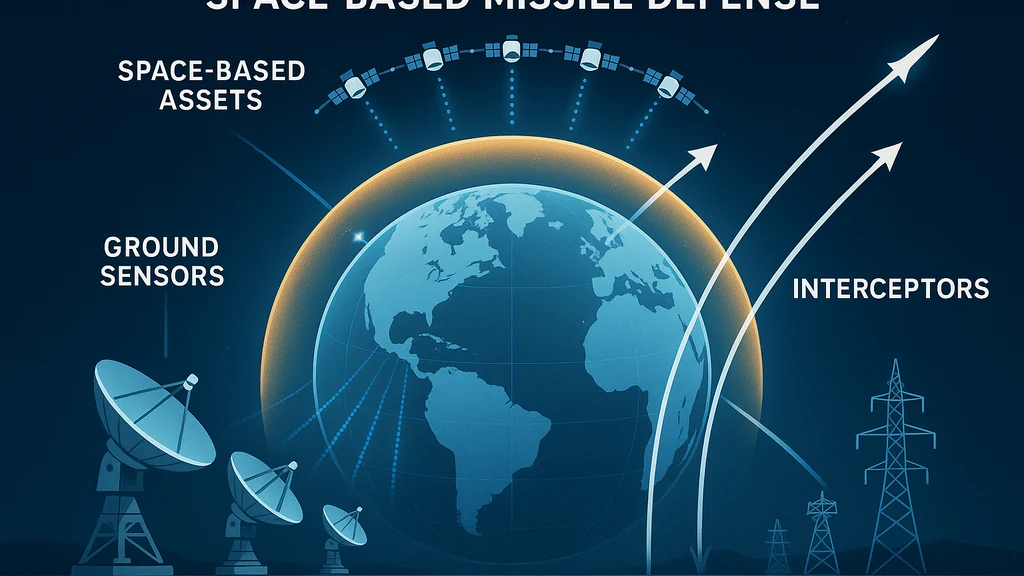
Snippet Block 3: How would space-based missile defense work? In broad terms, sensors, interceptor systems, and space-based assets would coordinate to detect launches and intercept missiles at various flight phases. The Golden Dome missile shield would combine earthbound radars with space assets, raising questions about persistence, maintenance, and the challenges of operating in a harsh space environment.
Snippet Block 4: Pentagon cost estimates for the Golden Dome circle near the hundreds-of-billions range, with Reuters noting a roughly $175 billion ballpark for the program and timelines aimed at early briefings followed by more detailed plans. Critics argue the price tag, complexity, and governance raise concerns about opportunity costs and strategic stability.
Snippet Block 5: China’s response has emphasized opposition to what it calls “offensive implications” of space-based defenses and warned they could fuel an arms race in space. The debate now centers on norms, treaties, and how the international community would police or constrain forward-looking military technology in orbit.
Key Takeaway: The Golden Dome missile shield is not a single device but a strategic, multi-layered approach with a space-based component that immediately raises questions about deterrence, costs, and global norms in space.
Complete Guide to Golden Dome missile shield
This is the definitive overview of the Golden Dome missile shield, designed to help you understand what it is, how it would work, what people are debating, and why it matters for deterrence, geopolitics, and future defense planning. I’ll break down the architecture, the strategic logic, and the international responses, with fresh data points and clear takeaways you can use in discussions, papers, or streams.
What is the Golden Dome missile shield?
-
The Golden Dome missile shield is a proposed US defense architecture intended to counter a broad spectrum of threats, including ballistic missiles, hypersonic glide vehicles, and cruise missiles. It’s framed as a multi-layer system with both traditional ground-based elements and a space-based layer designed to extend detection and interception capabilities. The concept has been publicly associated with high-level administration discussions and defense briefs; reports indicate the Pentagon is reviewing the architecture with a fuller plan due mid-fall. The Golden Dome name underscores an aim to create a dome of protection around the United States and its allies, stretching beyond conventional borders into space.
-
Key components would likely include layered sensors (on the ground and in space), rapid-fire interceptors, and a command-and-control network capable of processing signals, tracking threats, and directing missiles across layers of defense. The space-based layer is particularly controversial because it moves the battlefront into orbit, raising questions about space norms, governance, and the risk of unintended escalation in a crowded orbital environment.
-
Why it matters from a deterrence perspective: if a space-based layer could reliably shoot down certain threat classes, adversaries might rethink arming and deploying missiles that rely on traditional top-tier survivability. That shifts strategic calculations and could compress decision windows for leaders under alert conditions. The Golden Dome missile shield thus sits at the intersection of defense innovation and risk management for international security.
-
Takeaway: The Golden Dome is a holistic defense concept blending earthbound and orbital capabilities to confront a spectrum of modern missiles, with deterrence, cost, and norms as central tensions.
How would space-based missile defense work?
-
In principle, space-based defenses rely on orbiting assets to extend sensors’ reach, preemptively detect launches, and intercept threats earlier in flight. The Golden Dome missile shield would theoretically pair space-based interceptors or relay satellites with ground-based radars, aircraft and other sensors, creating a synchronized umbrella over a broad geographic area. This is different from traditional ballistic-missile defense that relies more heavily on ground-based interceptors and terrestrial radar networks.
-
Key engineering questions include: how to maintain precision in space, how to manage debris and collision risk, how to ensure resilient communications under attack, and how to fund and sustain a system that spans decades of life cycles and technological leaps. Space-based assets face radiation, thermal extremes, and solar activity, complicating deployment and maintenance.
-
Strategic implications include moderation of escalation risks in crisis periods, but also potential destabilization if adversaries doubt their own deterrent viability or respond with new, “hardier” weapons designed to defeat space-based intercepts. Analysts emphasize that the defense-in-space approach changes the logic of deterrence and could trigger an arms race in orbit if not accompanied by norms and treaties.
-
Takeaway: Space-based defense adds a powerful, technically complex layer to the Golden Dome concept, but its real-world effectiveness and stability hinge on credible implementation, robust space governance, and clear signaling to allies and adversaries.
Why did North Korea warn about the Golden Dome?
-
North Korea’s leadership has long prioritized maximizing its deterrent value while avoiding catastrophic confrontation. A space-based layer that could undermine nuclear deterrence logic poses a direct challenge to Pyongyang’s security strategy. Pyongyang’s warning signals concern that the United States seeks to erase or significantly reduce the survivability of North Korean nuclear assets, thereby pressuring the regime diplomatically and militarily.
-
The warning also reflects broader regional dynamics, including how allies like China view a space-based shield. If deterrence is perceived as eroding, North Korea might pursue countermeasures or accelerate its own missile development or testing programs, even as negotiations remain precarious. Analysts point to North Korea’s pattern of signaling during high-stakes security discussions as a strategic tool.
-
Takeaway: North Korea’s warning about the Golden Dome is a calculated signal aimed at preserving its deterrent leverage while scrutinizing the stability of a new US-led space defense framework.
What are the criticisms of the Golden Dome from China?
-
China has framed space-based defenses, including the Golden Dome, as having “strong offensive implications” and a potential to trigger an arms race in space. Beijing argues that deploying a space shield could destabilize strategic balance, provoke defensive countermeasures, and complicate international norms around the militarization of space.
-
Critics in Beijing and many foreign policy analysts contend that without comprehensive treaties or transparency, such systems risk prompting misperceptions, miscalculation, and rapid escalation in a crisis. They also worry about dual-use technologies that could blur lines between civil, commercial, and military space activities, making governance more complex.
-
Takeaway: China’s criticisms center on stability, governance, and the risk that space-based defenses could spark a broader, harder-to-control arms race in orbit if not carefully managed through norms and diplomacy.
How much will the Golden Dome cost?
-
The public discussions around the Golden Dome have pointed to a multi-hundred-billion-dollar scale. Reuters has reported a rough implementation figure around $175 billion, with the Pentagon briefing on architecture occurring in September 2025 and a fuller plan due by mid-November. Context matters: large defense programs often carry long lead times, evolving requirements, and technology-readiness challenges that can shift cost estimates.
-
Costs cover development, procurement, deployment, sustainability, and lifecycle maintenance for decades. Critics emphasize the opportunity costs—funds that could otherwise go to conventional missile defense, cyber, or homeland-security efforts—while supporters argue the geopolitical returns in deterrence justify the investment.
-
Takeaway: The Golden Dome’s price tag is substantial, and its ultimate cost will depend on design choices, scale, and how quickly the defense ecosystem can mature without compromising strategic stability.
What is space militarization, and what norms matter?
-
Space militarization refers to deploying military assets and activities in space, which raises questions about international law, norms, and governance. The current discourse around the Golden Dome includes calls for clear norms to prevent an arms race, avoid hostile signaling, and maintain space as a global commons rather than a battlefield.
-
Norms under consideration include transparency measures, confidence-building steps, and possible binding or non-binding agreements that limit certain types of weapons in space or constrain provocative testing. International forums, regional security discussions, and alliance commitments shape how these norms evolve in response to technologies like space-based missile defense.
-
Takeaway: The normative framework surrounding space weapons matters as much as the technical capability, guiding how nations manage risk, diplomacy, and the potential for escalation.
Why This Matters
-
The last three months have seen renewed attention to space-based missile defense, with concrete steps: a formal Pentagon architecture briefing around mid-September, and public commentary from major players about the implications for deterrence. Reuters’ reporting on the architecture briefing and cost estimates anchors the discussion in verifiable, recent events. BBC analyses have highlighted how North Korea views these developments as destabilizing to its nuclear deterrent.
-
The geopolitical stakes extend beyond the United States. China’s criticisms, North Korea’s warnings, and the broader international debate about space governance all shape how the Golden Dome would be perceived and responded to in crisis scenarios. Analysts warn that misperception or miscalculation in a space-enabled security architecture could raise the risk of inadvertent escalation.
-
The debate intersects with technology trends: sensor fusion, long-duration space platforms, AI-enabled command-and-control, and resilient networking. These tech trends drive both the feasibility and the risk of the Golden Dome approach. If implemented, the system would likely influence allied defense postures, export controls, and regional security calculations across Asia and beyond.
-
Takeaway: The Golden Dome represents a pivotal point where defense technology, deterrence theory, and international norms collide. The outcome depends on how architecture decisions, cost considerations, and diplomacy interact in the near term.
People Also Ask
What is the Golden Dome missile shield?
Could the Golden Dome turn outer space into a potential nuclear war field?
How would space-based missile defense work?
Why did North Korea warn about the Golden Dome?
What are the criticisms of the Golden Dome from China?
How much will the Golden Dome cost?
What is space militarization and norms?
How does deterrence change in space weapons era?
What is the Golden Dome missile shield?
The Golden Dome missile shield is a multi-layer defense concept that would blend ground-based sensors with a space-based layer to detect and intercept missiles across multiple flight regimes. It’s marketed as a way to close gaps in traditional defenses against next-generation threats. The debate centers on feasibility, stability, and how such a system would fit into international norms. The latest briefing and cost projections are shaping expectations about what the architecture could look like in practice. Key Takeaway: The Golden Dome is a holistic, orbital-involved approach to missile defense, with strategic signals about deterrence and global governance.
Could the Golden Dome turn outer space into a potential nuclear war field?
In theory, a space-based layer could alter how leaders think about launch-on-warning decisions, potentially creating faster response loops and broader orbital activity. Critics warn that any space weaponization increases the risk of misperception and rapid escalation in a crisis, which could make space a new theater for nuclear risk. Proponents argue careful design and norms can mitigate these risks while boosting security. Key Takeaway: Space-as-warfield concerns hinge on signaling, governance, and crisis stability; without solid norms, the risk of unintended escalation grows.
How would space-based missile defense work?
Space-based components would work alongside ground sensors and interceptors to detect launches, track missiles, and coordinate interception. Core challenges include maintaining precision, ensuring resilient communications, and handling debris and space weather. The Golden Dome’s effectiveness would depend on integration with existing systems and the ability to sustain space assets over decades. Key Takeaway: The operational model hinges on robust space-ground coordination and resilient, long-lasting assets.
Why did North Korea warn about the Golden Dome?
North Korea views any U.S. shift toward space-based defenses as a potential undermining of its deterrent. Warnings reflect a mix of signaling to deter negotiation pressure, avoid perceived vulnerability, and test the international community’s response to a shift in deterrence dynamics. Pyongyang’s reaction is part of its broader strategic posture.
Key Takeaway: North Korea’s warning is a strategic signal designed to preserve its deterrent leverage and test diplomatic responses.
What are the criticisms of the Golden Dome from China?
China argues space-based defenses risk destabilizing balance, prompting an arms race in space, and undermining global norms. Critics also point to transparency gaps, governance challenges, and the possibility of misinterpretation during crises. The Chinese position emphasizes stability and multi-lateral dialogue to avoid escalation.
Key Takeaway: China’s criticisms focus on stability, norms, and the risk of an uncontrolled space arms race.
How much will the Golden Dome cost?
Estimates in public discussions hover around the low-to-mid hundreds of billions, with Reuters reporting figures around $175 billion for initial architecture and execution. Final costs will hinge on design choices, scaling, and how quickly the system can be matured, tested, and sustained over decades.
Key Takeaway: Cost is a major factor shaping feasibility and political support for the Golden Dome; budgets must balance innovation, deterrence, and opportunity costs.
What is space militarization and norms?
Space militarization refers to deploying military capabilities in space, raising questions about governance and international law. Norms—such as transparency, confidence-building measures, and potential treaties—aim to prevent destabilizing behavior. The Golden Dome has accelerated calls for space governance to avoid a race to orbit with unintended consequences.
Key Takeaway: Norms and governance are essential to keeping space peaceful while allowing legitimate defense research.
How does deterrence change in space weapons era?
Space weapons shift the strategic calculus by enabling earlier detection and potential denial of an adversary’s nuclear or strategic assets. They can deter or prompt countermeasures, depending on signaling, redundancy, and survivability. The risk of miscalculation rises if actors maintain divergent beliefs about space weapon capabilities.
Key Takeaway: The space weapons era redefines deterrence—now outward, faster, and more complex—requiring careful diplomacy, credible defense planning, and norms to avoid missteps.
Next steps for readers
- Stay updated on official Pentagon briefings and cost analyses to understand how the Golden Dome architecture could evolve.
- Watch how North Korea and China frame the issue in upcoming regional forums and UN discussions, as these discussions may influence norms and treaties.
- Consider how space governance, alliance commitments, and regional defense postures interact with space-based defense concepts in your own analyses, streams, or coursework.
- Related topics to explore for internal linking: space governance norms, hypersonic missile defense, deterrence theory, space situational awareness, US defense budget trends, Chinese regional security strategy, North Korea missile development, arms control treaties.
Key Takeaway: The Golden Dome missile shield sits at a crossroads of innovation, deterrence, and governance. Its ultimate shape will be decided by architecture choices, costs, and the caliber of international diplomacy in the next year.
If you want a deeper dive into any subtopic—architecture specifics, cost breakdowns, or the latest North Korea and China official statements—tell me which angle you want next, and I’ll pull the latest details into a tight explainer you can share on a stream or in a paper.