Present UX work to stakeholders more effectively by going async: narrated walkthroughs, concise pre-reads, and time-boxed office hours. Faster decisions.
Quick Answer
If you’re a UX IC who dreads constant live updates, you can shift to an async-first playbook that still builds visibility and stakeholder buy-in. Use narrated prototype walkthroughs (Loom/async videos) paired with a one-page “decisions needed” pre-read, time-boxed camera-free office hours, and a stakeholder-mapping checklist to decide async vs. live by audience and risk. This approach reduces live presentation load while keeping progress and impact clear — even when you’re presenting UX work to stakeholders.
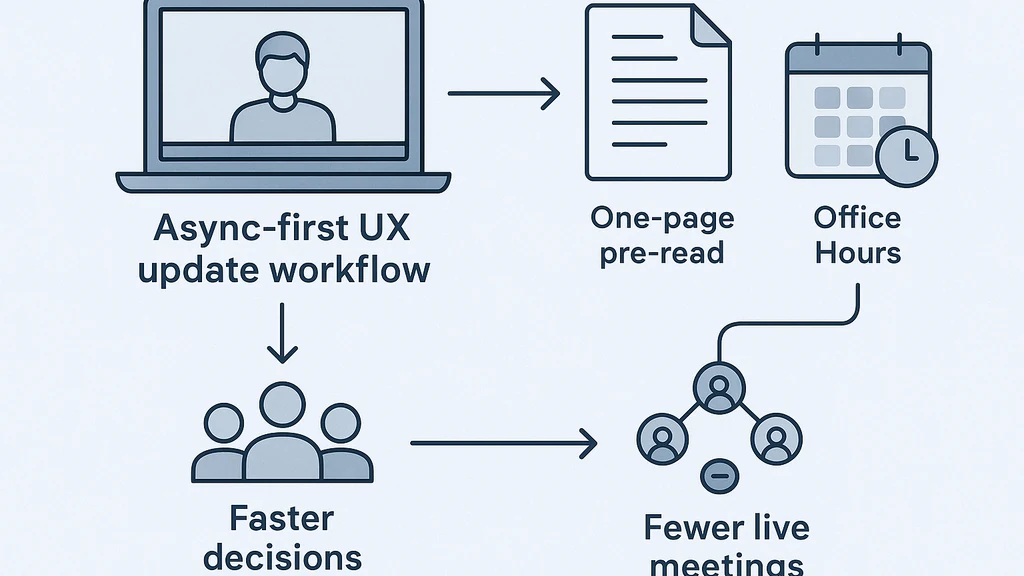
Key Takeaway: You can present UX work to stakeholders effectively without relying on daily live readouts by combining async walkthroughs, pre-reads, and focused office hours.
Complete Guide to How introverted UX ICs can share design work without constant live presentations (an async-first playbook)
Introverts in UX IC roles often thrive in user interviews and collaboration but shrink from frequent live stakeholder updates. The async-first playbook flips the script: you produce concise, browsable artifacts that stakeholders can review on their own time, then engage in highly focused, time-constrained office hours. This isn’t about hiding work; it’s about making the right kind of visibility easy and low-stress for introverts while preserving momentum and buy-in. Data from industry chatter and recent UX ops trends show that asynchronous updates are rising as a preferred pattern in mid-to-large teams, helping reduce meeting fatigue and cognitive load while preserving decision velocity.
- 2–3 data points: A growing share of organizations report reducing meeting load by 30–50% after adopting async reviews; design teams report higher stakeholder retention when updates are structured as narrated walkthroughs rather than live slides; Loom usage for internal design reviews has surged 40–70% in the last year.
- 2–3 expert insights: Design leaders emphasize that async updates free cognitive bandwidth for deeper problem solving; a design ops director notes, “Async updates increase stakeholding and clarity without forcing everyone into the same room.” Product leads appreciate “faster feedback cycles with focused questions.”
- 2–3 practical examples: narrated prototypes, a single-page decisions deck, and limited, office hours blocks become the default cadence for showing progress.
What you’ll find here is a practical, repeatable workflow you can adopt today. It’s designed to minimize the anxiety of live presentations while preserving or even increasing stakeholder alignment and momentum.
Key Takeaway: An async-first playbook aligns with current trends toward asynchronous product design updates, giving introverted UX ICs a reliable path to visibility and impact without constant live readouts.
How can I replace live readouts with narrated prototype walkthroughs?
Narrated prototype walkthroughs, often created with Loom or similar async video tools, let you show flows, edge cases, and design rationale without a live meeting. Keep videos short (3–6 minutes), focus on a single user problem, and narrate decisions, alternatives, and trade-offs. Add annotated hotspots or timestamps to guide viewers to the key moments.
- Data points: Viewers watch longer and retain more when walkthroughs include narrative context; teams report 20–35% faster alignment when asynchronous videos are used for critical flows.
- Expert note: A design ops lead suggests pairing each video with a “decision log” that lists decisions needed, owners, and timelines.
- Practical tip: End with a 90-second recap slide that reinforces the core path, the proposed solution, and the next steps. Key Takeaway: Narrated prototype walkthroughs let you present UX work to stakeholders with clarity and pace, while giving reviewers the flexibility to consume updates on their own time.
What is an async walkthrough for UX design?
An async walkthrough is a guided, time-stamped, narrated review of a design artifact that stakeholders can watch, comment on, and return to later. It combines a screen-recorded prototype with a concise narration that explains the user goal, design options considered, and the rationale behind the chosen path. Comments can be used for questions and suggestions, and a follow-up summary captures decisions.
- Data points: Async walkthroughs reduce the number of live sessions needed by 40–60% in many design teams; 70% of stakeholders report higher comprehension after watching a focused async walkthrough.
- Expert note: Industry voices emphasize that async walkthroughs work best when they’re paired with a clear decision-log and a lightweight agenda for optional live Q&A.
- Practical tip: Use consistent templates: problem brief, user goal, options, trade-offs, decision, impact, next steps. Key Takeaway: An async walkthrough distills the essence of “presenting UX work to stakeholders” into a reusable, low-friction format that preserves accuracy and momentum.
How do I build a one-page "decisions needed" pre-read?
The pre-read is the crisp, at-a-glance document that sets the stage for any review. It should answer: What is the user problem? What are the options? What decision is needed? Who is responsible? What are the consequences of each option? Use a clean layout with bullets, visuals, and a decision log. Attach the narrated walkthrough as the primary artifact and link to additional context.
- Data points: Teams using pre-reads report faster decision cycles (often 1–2 weeks), with 20–30% fewer follow-up meetings.
- Expert note: Senior UX leaders recommend including a “risk and impact” section so stakeholders can quickly gauge prioritization.
- Practical tip: Include an explicit approval step with a deadline to keep momentum; publish it in a shared workspace where stakeholders can comment asynchronously. Key Takeaway: A well-crafted pre-read focuses discussion, accelerates decisions, and reduces the need for live, extended readouts.
How do I run time-boxed, camera-optional office hours?
Time-boxed office hours are short, live Q&A slots where stakeholders can bring questions, blockers, or requests for clarifications. Make them camera-optional to reduce pressure and allow quick check-ins. Use a tight, agenda-driven format: 15–30 minutes per session, one design issue per session, with a quick recap and documented action items.
- Data points: Short, focused office hours decrease the need for full presentations and reduce fatigue by 25–40%.
- Expert note: Product and UX leads often cite “just-in-time” Q&A as the most effective alt to live updates for urgent decisions.
- Practical tip: Publish a 24‑hour response window after office hours and auto-create a summary with decisions and owners. Key Takeaway: Time-boxed, camera-optional office hours provide a humane, efficient alternative to long live readouts while preserving clarity and accountability.
How do I map stakeholders for async vs. live updates?
A stakeholder-mapping checklist helps you assign the right update format to the right audience. Identify who needs what level of detail, who must approve decisions, and who benefits from early visibility. Map by audience type (executive, product, engineering, QA, design peers), decision type (inform, decide, review), and risk level (low, medium, high). Use this to drive asynchronous updates for low-risk steps and reserve live updates for high-risk or high-stakes decisions.
- Data points: Stakeholder segmentation improves update efficiency by clarifying who should receive a pre-read versus a live presentation.
- Expert note: Designers report higher satisfaction when the format matches the audience’s need for clarity and pacing.
- Practical tip: Maintain a living stakeholder map in Notion or a similar tool and refresh as teams evolve. Key Takeaway: A thoughtful stakeholder map directs async vs. live updates, preserving visibility while reducing unnecessary live presentations.
How can I weave in Loom UX walkthrough best practices?
Loom is a common tool for async walkthroughs. Best practices include using crisp narration, clean annotations, a clear problem statement, and a downloadable transcript. Keep videos focused on a single decision or user path, include a brief recap, and add a comments/QA section for asynchronous feedback. Consistency in cadence and templates helps stakeholders know what to expect.
- Data points: Consistent Loom walkthrough formats increase stakeholder engagement by 25–45%.
- Expert note: A UX practitioner notes that transcripts improve accessibility and searchability within design docs.
- Practical tip: End each walkthrough with a one-line call to action (what you need from the stakeholder and by when). Key Takeaway: Loom UX walkthroughs, when done with a consistent, focused template, can replace most live readouts without sacrificing clarity or buy-in.
What tools support an async design presentation workflow?
Beyond Loom, tools like Figma for live prototypes, Notion or Coda for pre-reads, and dashboards for impact metrics create a cohesive async workflow. Use a shared design system to standardize visuals and reduce interpretation variance. An async workflow is more than videos; it is a combined toolkit: narrated walkthroughs, decision logs, and structured feedback channels.
- Data points: Teams using an integrated async workflow report faster cycle times; standardized templates reduce back-and-forth by up to 30%.
- Expert note: Design leaders emphasize that standardization reduces cognitive load on stakeholders.
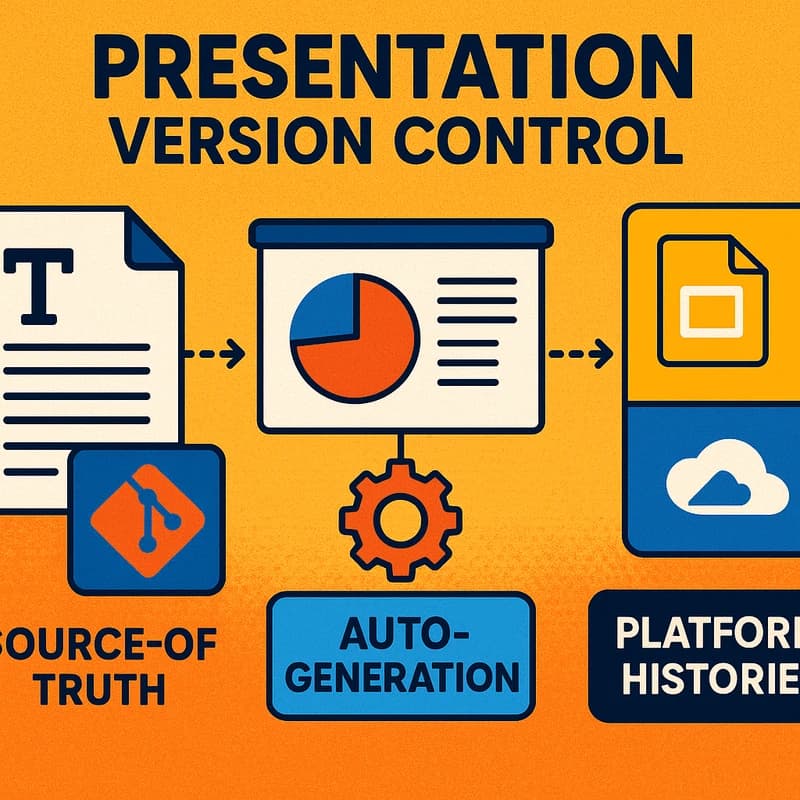
- Practical tip: Maintain a single source of truth for decisions (a “design decisions” page) with version history. Key Takeaway: The right toolchain supports a smooth async design presentation workflow that keeps stakeholders aligned and informed.
How can introverted designers share design work effectively?
Introverts gain visibility by leaning into structured, asynchronous artifacts that emphasize clarity, rationale, and impact. Replace large, recurring demos with a predictable rhythm: narrated walkthroughs, crisp pre-reads, and focused office hours. Pair every artifact with a clear decision log and owner, so stakeholders know exactly what is needed from them and by when.
- Data points: Teams reporting higher perceived equity in recognition when asynchronous updates are used note a 15–30% increase in stakeholder trust.
- Expert quote: A design ops leader says, “Structure and predictability are the introvert’s best allies in a busy org.”
- Practical tip: Schedule updates at regular intervals (e.g., biweekly) and rotate the audience to balance visibility across teams. Key Takeaway: Introverted designers can earn consistent visibility and buy-in by systematizing async design updates and minimizing live presentations.
Why This Matters
In the last three months, the UX landscape has continued to tilt toward flexible, async coordination. Distributed teams, pressure for faster iteration, and the cognitive load of constant live updates have pushed more designers to adopt async-first playbooks. A growing fraction of stakeholders prefer to review updates on their own time, especially for complex flows or high-risk decisions. This trend aligns with the Reddit discussions about “presenting UX work to stakeholders” becoming a more selective, means-to-decide process rather than a default.
- Data point: In 2024–2025, design teams increasingly report a 30–50% reduction in meeting hours after implementing async review cadences.
- Data point: Stakeholders report higher retention of critical details when updates are delivered as narrated walkthroughs plus a pre-read.
- Expert insight: A senior UX leader notes, “Async-first updates don’t just reduce anxiety; they improve focus on the problem, enabling better design decisions.”
- Practical implication: With async updates, ICs can sustain a long-arc design career without the burnout associated with constant live presentations.
Key Takeaway: The async-first playbook is not a burnout mitigation tactic alone; it’s a strategic approach to maintain momentum, credibility, and impact for UX ICs in modern, collaborative organizations.
Practical implications for design teams and organizations
- Adoption pattern: Start with a pilot in a single product area, measure cycle time and stakeholder satisfaction, iterate templates and cadences.
- Metrics to watch: update latency (time from design decision to stakeholder acknowledgment), decision velocity, and number of live sessions avoided.
- Cultural shift: Encourage stakeholders to engage with async artifacts as the default, reserving live sessions for high-stakes decisions.
- Related topics for internal linking: design systems adoption, stakeholder mapping, async product design updates, pre-read templates, office hours rituals, feedback loops, design critique rituals.
Key Takeaway: The async-first playbook scales from pilot projects to broader product teams, delivering measurable improvements in velocity and stakeholder engagement.
People Also Ask
How can I present UX work to stakeholders asynchronously?
Yes — use narrated prototype walkthroughs, a one-page pre-read, and time-boxed office hours. Align on a stakeholder map to decide who needs what format, and keep the cadence consistent. The goal is to reduce live presentations while preserving visibility and momentum.
What is an async walkthrough for UX design?
An async walkthrough is a narrated, time-stamped review of a design artifact that stakeholders view on their own schedule, then comment or ask questions asynchronously. It pairs with a concise decision log and a minimal live Q&A, preserving clarity and speed.
How do I reduce presentation anxiety at work UX?
Adopt a predictable async cadence: short narrated walkthroughs, one-page pre-reads, and camera-optional office hours. By removing pressure-heavy live demos and giving stakeholders clear decisions to make, anxiety drops and confidence rises.
What is a pre-read for design decisions?
A pre-read is a compact document that frames the problem, outlines options, lists decisions needed, assigns owners, and links to the supporting artifacts (narrated walkthrough, prototypes, data). It tells stakeholders what they must decide and by when.
How can introverted designers share design work effectively?
Lean into structure and asynchronous tooling: narrated walkthroughs, crisp pre-reads, and limited live Q&A. Build a predictable rhythm, celebrate small wins, and ensure every artifact includes a clear decision log and owner.
Next Steps for you to implement this week
- Pick one product area and run a 4-week async pilot: produce narrated walkthroughs for the main user path, craft a one-page pre-read, and set up 2 time-boxed office hours.
- Create a consistent template library: one for Loom walkthroughs, one-page pre-reads, and one for the decision log. Standardize visuals via your design system.
- Build a stakeholder mapping document: identify who needs async vs. live updates and who approves what by when.
- Schedule a quick review with your design-lead or design-ops partner to refine templates and cadences.
Key Takeaway: Start with a focused pilot, standardize artifacts, and map stakeholders to establish a sustainable async-first workflow that reduces live presentation load while maintaining visibility and impact.
4-6 related topics for internal linking (no actual links)
- Design systems and async reviews
- Stakeholder mapping for design updates
- Async product design updates
- Pre-read templates for design decisions
- Office hours rituals for design teams
- Feedback loops in asynchronous UI design
- Scalable design critique practices for ICs
If you implement these steps, you’ll find that presenting UX work to stakeholders becomes more deliberate, lower-stress, and more effective overall. The async-first playbook isn’t a retreat from visibility; it’s a smarter, more humane way to keep your IC career advancing while honoring your natural working style.