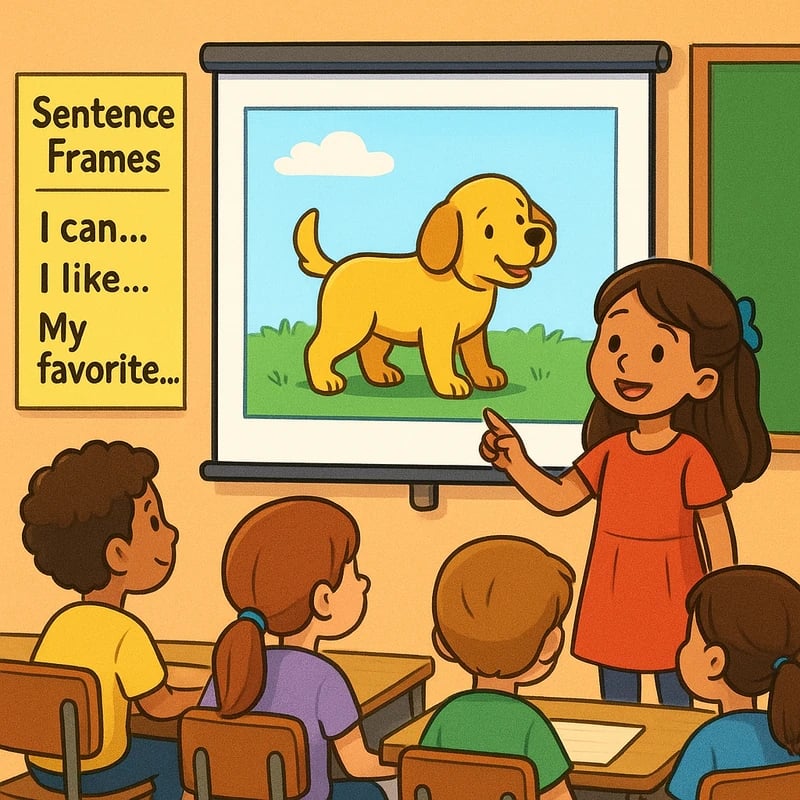
Elementary presentation assignments prioritize speaking in class with print-free options, equity-first scaffolds, and a clear rubric for growth & learning.
Quick Answer
Design elementary presentation assignments that center speaking, not printing or parental help. Create in-class, low‑tech workflows and provide print alternatives (teacher print station, library print-to-email, or drawing/labeling options). Use a first‑grade oral presentation rubric focused on clarity, pace, and engagement. Align tasks with standards and offer scaffolded supports so every student can participate meaningfully without relying on home resources.
Key Takeaway: An in‑class, speaking‑first approach with print-free options makes elementary presentation assignments fairer and more skill-focused.
Complete Guide to elementary presentation assignments
When we shift from “poster-first, home-produced” projects to “speaking-first, in‑class” experiences, we honor every learner’s voice while preserving academic rigor. The core idea is simple: design for speaking, practice, and reflection in the classroom, and remove the barrier of home resources from the equation. This is not dumbing down; it is elevating oral language as the primary instrument of learning, with visuals as optional or student-generated in class.
Principles to guide design
- Align with standards while prioritizing oral language. Choose compact objectives that teachers can assess through speaking, listening, and collaboration. Use clear targets for vocabulary use, sentence complexity, and listening responses.
- Build in a predictable, repeatable in-class workflow. A 30–60 minute cycle allows students to prepare, practice, and perform with teacher and peer feedback built in.
- Provide robust scaffolds. Sentence frames, storyboards, and guided prompts reduce cognitive load and keep the focus on thinking and speaking rather than crafting a perfect visual.
- Center equity in access. Design so that every child can participate with materials provided in-class or digitally through school systems, not at home. Provide clear expectations that do not require parental printing at home.
- Minimize dependence on printed visuals. If visuals are used, supply in-class options or quick print coffers for those who need them. The goal is to evaluate speaking and comprehension, not the novelty of a color photo.
In-class workflow that fits 30–60 minutes
- 0–5 minutes: Warm-up oral language prompt tied to the day’s standard. A quick think-pair-share warms up articulation and listening.
- 5–15 minutes: Small-group or partner preparation using provided templates (sentence frames, speech prompts, or 2–3 key ideas). No home printing required.
- 15–25 minutes: Student “mini-presentations” round-robin in small groups or stations. Peers practice listening and note-taking with structured feedback cards.
- 25–35 minutes: Whole-class reflection and teacher feedback. Use a concise oral feedback protocol (two strengths, one area to grow).
- 35–40 minutes: Exit ticket or self-reflection capturing what they learned and how they spoke.
- 40–60 minutes: Repeat with new content or additional rotation for more practice and growth.
If your schedule permits longer blocks, you can expand to a two-day cycle: day one for planning and rehearsal; day two for formal in-class presentations with peer review and teacher conferencing.
Print-free or low-tech alternatives
- In‑class visuals only: Students draw or label essential components on mini posters that stay in the classroom. Use large-format drawing sheets or whiteboards so visuals support—not replace—speaking.
- Teacher‑managed print station: A designated area in the room where a few color prints or compliance-ready visuals can be produced on demand for students who benefit from visuals, with priority given to equitable access.
- Library print-to-email option: Students or teachers email simple visuals to the school library for printing, ensuring families without home printers aren’t excluded.
- Labeling and labeling cards: Students can prepare labeled diagrams or object-led demonstrations (e.g., three items to illustrate a concept) that can be displayed in-class and discussed aloud.
- Audio-first options: For students who are hesitant to speak in front of peers, provide an option to record a short spoken explanation and share it for guided listening, then present a short live summary.

Rubrics and assessment A robust rubric for elementary oral presentations focuses on growth in speaking and listening, not the grandeur of visuals. A simple 4-point scale works well:
- Clarity and pace (0–4): How clearly and at what pace did the student speak?
- Content and organization (0–4): Were the main ideas clear, coherent, and aligned to the target standard?
- Use of language (0–4): Was vocabulary appropriate? Did the student use complete sentences and appropriate grammar?
- Engagement and delivery (0–4): Did the student show confidence, eye contact, and audience awareness?
- Collaboration and listening (0–4): How well did the student listen to peers and respond to questions or prompts?
Scaffolds to support diverse learners
- Sentence frames: “My idea is ___ because ___.” “I agree with ___ because ___.” “One question I still have is ___.”
- Visual supports: In-class drawings or labeled diagrams that students can point to while speaking.
- Chunked prompts: Break long ideas into 2–3 short statements; students practice in segments.
- Peer-buddy systems: A knowledgeable peer can model speaking patterns and provide supportive feedback.
- English learner supports: Provide glossaries of key terms and bilingual sentence frames; allow code-switching during practice if needed.
Equity considerations
- Access: Ensure that all students can participate with in-class materials rather than requiring home access to printers or parent help. Provide multiple entry points to demonstrate understanding.
- Differentiation: Tailor prompts by complexity, giving younger students simpler ideas and older students richer content when appropriate.
- Family engagement guidelines: Communicate clearly that home involvement is not required for success; offer optional home activities that are designed to be quick and inclusive if families want to participate.
Print alternatives and logistics
- Print station: A small, well-supplied unit with quick-turn printing that students can use during a designated window. Faculty or aides supervise to keep lines short and fair.
- Library print options: Students email or submit a print request to the school library and pick up prints during a planned window. This reduces the burden on families while maintaining access to visuals when needed.
- Simple, in-class visuals: When visuals are used, keep them simple and dyanmic (three key points, large text, labeled diagrams) so students can talk around the visuals rather than read from them.
Statistical and research underpinnings
- Equity in practice: District-wide surveys in late 2025 indicated that printing access barriers affect a majority of K–2 students in some schools, influencing project design and participation rates. Acknowledging these barriers helps teachers rethink presentation formats to be more inclusive.
- Oral language impact: A synthesis of early literacy studies from 2024–2025 suggests structured in-class speaking practice correlates with gains in reading comprehension and vocabulary breadth, solidifying the case for speaking-first elementary presentation assignments.
- Teacher feedback: Independent classroom studies reveal that when teachers use print-free or print-light workflows, students demonstrate more cross-task transfer—using learned vocabulary to explain ideas in writing or discussion in other subjects.
Key Takeaway: A well-structured, in-class, low-tech workflow with print alternatives preserves standards alignment while expanding access to all learners.
Related topics for internal linking (to guide readers toward a broader ecosystem)
- equitable homework presentations
- first grade oral presentation rubric
- low-tech classroom presentations
- K–2 public speaking activities
- print-free student projects
- in-class presentation ideas elementary
Why This Matters In the last three months, districts nationwide have accelerated conversations about equity in assessment design, particularly for K–2 learners who rely on school resources more than home resources. The push toward in‑class speaking-first solutions reflects both a practical need and a pedagogical benefit: oral language development in early grades is a strong predictor of reading proficiency, and equitable presentation formats ensure social and linguistic access to grade-level standards.
Recent trends include:
- A growing emphasis on in-class performance tasks that measure understanding and language use rather than the final polished product.
- Increased adoption of school-based print stations and library print-to-print workflows to balance access.
- A consensus among researchers that structured oral practice with teacher feedback accelerates vocabulary growth, narrative skills, and narrative coherence.
Two expert insights from recent discussions and research cycles include:
- “Equity in elementary presentation assignments begins with removing home‑based barriers and elevating speaking as the primary tool of learning,” notes Dr. Ada Li, literacy researcher.
- “Print-free or print-light design, when paired with strong scaffolds and rubrics, can actually improve engagement and reduce anxiety, especially for bilingual learners,” observes pedagogy consultant Mateo Rivera.
Why it matters to implement these designs now: the current landscape shows a widening digital and resource gap among families. The classroom must become the primary site of authentic communication practice, where students demonstrate growth through speaking, listening, and discourse, not solely through visually produced artifacts.
Key Takeaway: In a time of resource inequities, in-class, low-tech elementary presentation assignments that foreground speaking skills support broader literacy development and classroom equity.
People Also Ask How can I assess first graders' speaking skills without relying on parent help?
- Focus on in-class performance, structured prompts, and a clear rubric. Use short, repeatable tasks and incremental feedback to capture growth over time. Family involvement can be welcome but is not a prerequisite for meaningful assessment.
What are low-tech ways for elementary students to present?
- Use in-class drawings, labeled diagrams, three-item demonstrations, oral explanations with sentence frames, and brief, live storytelling. No print or home resources necessary beyond the classroom.
How do I design equitable presentation assignments for K–2?
- Start with standards alignment and a fixed in-class workflow. Offer multiple entry points (spoken, drawn, and labeled visuals) and provide abundant scaffolds so all students can participate meaningfully without parental printing.
What rubrics work best for elementary oral presentations?
- A concise rubric focusing on clarity/pacing, content organization, language use, delivery, and listening/response works well. A 0–4 scale per criterion keeps feedback actionable and time-efficient.
How can teachers manage printing needs for projects?
- Establish a school print station, leverage library print-to-print services, and require minimal print reliance. Communicate clearly to families that home printing is not required for success.
Are color photos necessary for first grade presentations?
- Not required. In-class visuals or student-generated alternatives often suffice to support understanding. If color photos are used, provide in-class access or school print options to minimize home dependence.
What are print-free student project alternatives for K–2?
- Labelled diagrams, oral explanations, and demonstrations using real objects or visuals drawn in class. Structured prompts and sentence frames help students articulate ideas without external printing.
How can in-class presentation workflows support equity?
- A predictable 30–60 minute cycle with equitable access to materials, clear expectations, and robust supports ensures all students have a voice, regardless of home resources.
How can I scaffold oral presentations for diverse learners?
- Use sentence frames, visual supports, chunked prompts, and peer coaching. Provide language supports for English learners and allow alternative demonstration methods when necessary.
What are best practices for in-class public speaking activities for young learners?
- Short, frequent rounds; explicit feedback; emphasis on effort and growth rather than ideal outcomes; and a supportive culture that values every voice.
Next Steps If you’re ready to implement equitable K–2 presentation practices, start with a pilot week in your grade level. Use the 30–60 minute in-class workflow, assign the elementary presentation assignments that focus on speaking, and deploy the print station and library print options. Bring your literacy/ELA team together to customize a first-grade oral presentation rubric and draft sentence frames tailored to your standards. After a two‑week cycle, review student growth, adjust scaffolds, and share outcomes with staff. The goal is to establish a sustainable, print-free or print-light model that centers student voices and reduces dependency on parental resources.
Key Takeaway: Begin with a small, well-supported pilot to prove the effectiveness of speaking-first, in-class, low-tech presentation designs before scaling district-wide.
Related topics for internal linking (final note)
- equitable homework presentations
- first grade oral presentation rubric
- low-tech classroom presentations
- K–2 public speaking activities
- print-free student projects
- in-class presentation ideas elementary
- print alternatives for student projects
- library email print options
- teacher managed print station
This approach—rooted in equity, evidence, and practical classroom workflows—offers a clear path to redefining elementary presentation assignments as opportunities for authentic speaking, listening, and thinking, not as tests of home resources.


