AI for sales deck creation trims deck time by up to 60% with a single-source-of-truth doc, tokenized personalization, and a locked brand library. Learn how.
Quick Answer
AI for sales deck creation enables a doc-to-deck workflow that cuts deck time by roughly 60%—from multi-hour efforts to minutes—by leaning on a single-source-of-truth messaging doc, tokenized personalization variables, and a locked brand slide library. AI-generated decks replace bulky PDFs with personalized, trackable microsites, while async video walkthroughs provide engagement data that reinforces governance and speed. Real-world pilots show deck time dropping from 3–4 hours to about 45 minutes, with reps saving ~35% of their deck-building time.
Key Takeaway: A single-source-of-truth doc paired with AI-driven deck generation unlocks fast, brand-safe personalization at scale.
Complete Guide to AI for sales deck creation
A practical, implementation-focused guide to reclaim selling time with a doc-to-deck AI workflow, governance for brand-safe output, and trackable customer interactions.
How can AI help create sales decks faster?
AI handles repetitive formatting, slide assembly, and data visualization from a centralized messaging doc, so reps spend more time with customers and less time on decks. In a real-world signal from March 2026, a SaaS founder reported deck creation time fell from 3–4 hours to ~45 minutes after adopting a doc-to-deck flow with AI. The same source noted reps previously spent about 35% of their time on decks, a heavy drag on discovery-to-proposal cycles. Beyond speed, AI accelerates consistency across teams and improves governance by pulling approved content from a single source.
Data points and guidance:
- Time saved example: 3–4 hours down to ~45 minutes.
- Prior deck time as a share of reps’ schedule: ~35%.
- Governance implication: brand-aligned output with fewer last-minute edits.
Key Takeaway: Use AI to automate the boring, repetitive parts of deck creation, freeing reps to focus on discovery and negotiation.
What is a doc-to-deck workflow?
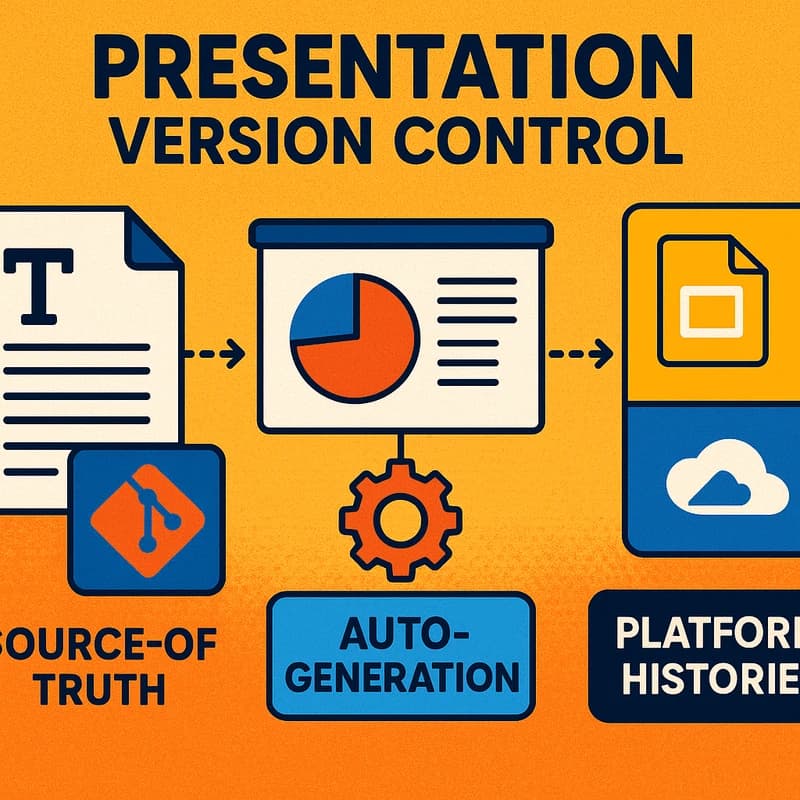
A doc-to-deck workflow centers a master, brand-approved document as the source of truth. The workflow maps sections and tokens in the doc to slides in a deck, leverages AI to generate slides that reflect the latest messaging, and outputs a deck that can be instantly customized via tokenized variables for each customer. The process reduces duplicate work and ensures every deck remains aligned with the current product story, value props, and success stories.
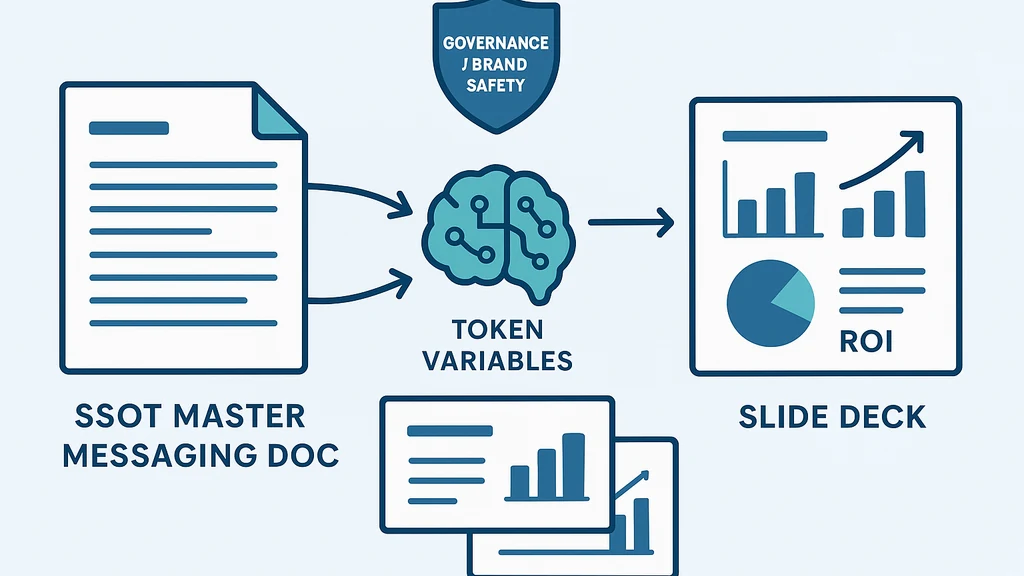
Implementation steps:
- Create a single-source-of-truth messaging doc with approved assets, use cases, and ROI math.
- Define slide templates and token variables (e.g., company name, industry, persona, use case).
- Run AI generation to assemble the deck, then route through governance for approvals.
- Export to a deck format or push to a personalized microsite for the buyer.
Evidence and notes:
- The doc-to-deck approach reduces manual re-assembly and speeds up iteration.
- Token variables enable rapid personalization without redrafting core content.
Key Takeaway: The doc-to-deck workflow is the backbone of scalable, brand-safe automation.
How do you personalize sales decks at scale?
Scale personalization by using tokenized variables embedded in the master doc. Tokens replace client-specific details (name, industry, buyer persona, use case, metrics) as the AI assembles each deck. This keeps the core, approved messaging consistent while delivering a tailored narrative per prospect. Libraries of personalized slides, charts, and ROI scenarios can be mixed and matched per account, with AI adjusting visuals and data to reflect the client context.
Practical tips:
- Build a library of persona-driven narratives and data visualizations.
- Use dynamic charts that auto-refresh with client data pulled from integration sources.
- Maintain a strict approval process for token sets to protect accuracy.
Data point: personalized proposals and decks tracked in pilot programs showed improved engagement metrics and faster progression through discovery.
Key Takeaway: Tokenized personalization is the lever that scales the human touch without slowing down the sale.
What is a proposal microsite and how does it compare to a PDF?
A proposal microsite is an interactive, trackable landing page that houses the deck, supporting docs, ROI calculators, and CTAs. It replaces static PDFs with a living, brand-safe experience that can be shared via secure, personalized links. Microsites provide analytics—views, dwell time, slide interactions, CTA clicks—so sellers can see what resonates and optimize accordingly. Compared with PDFs, microsites typically deliver higher engagement, easier sharing, and better governance through access controls and versioning.
Key considerations:
- Engagement tracking: time-on-page, slide-level interactions, CTA conversions.
- Personalization: client-ready pages with tokenized content, partner content, and case studies.
- Governance: controlled access, audit trails, and centralized content updates.
Data point: pilot programs report higher engagement with microsites versus PDFs, with tangible movements through the sales funnel.
Key Takeaway: Proposal microsites turn static proposals into measurable, customer-centric experiences.
What is deck template governance and why is it important?
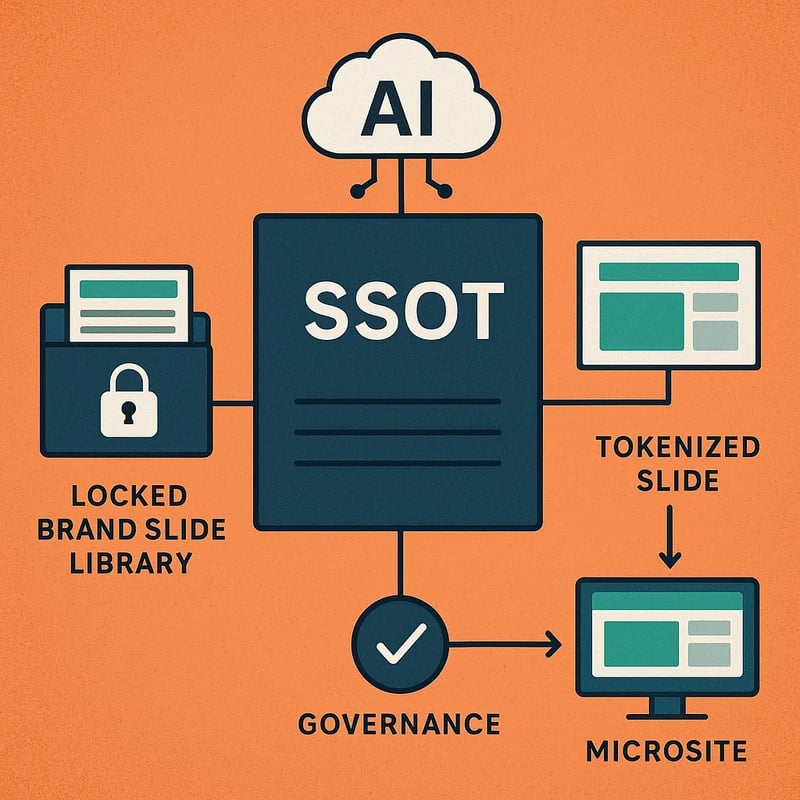
Deck template governance is the framework that controls how decks are built, updated, and deployed. It includes a locked brand slide library, version control, and an approval workflow to ensure every deck adheres to brand standards and compliant messaging. Governance reduces brand risk, minimizes formatting inconsistencies, and speeds output by providing stable templates that AI can reliably populate.
Governance in practice:
- Maintain a locked, approved brand slide library that AI can pull from automatically.
- Implement versioning so updates propagate without rework.
- Enforce approvals for new slides or data sources before distribution.
Impact: strong governance translates into faster, safer scale—more decks in market with fewer brand errors.
Key Takeaway: A disciplined template governance model is essential to keep speed from turning chaotic and ensure brand integrity.
Can AI replace designers in sales deck creation?
AI acts as a powerful co-pilot, not a wholesale replacement for designers. It excels at rapid assembly, data visualization, and consistency across thousands of decks. Designers remain critical for high-fidelity storytelling, layout artistry, and nuanced visual cues that convey emotion and credibility. The best programs combine AI-generated first drafts with human design review, enabling rapid iteration while preserving craft.
Practical guidance:
- Use AI to draft the structure, data visuals, and slide placeholders.
- Have designers refine typography, imagery, and storytelling flow.
- Use a human-in-the-loop QA to catch subtle brand or accuracy gaps.
Key Takeaway: AI accelerates production, but human design expertise preserves quality and storytelling power.
How can you track engagement with AI-generated decks?
Track engagement by deploying AI-generated decks into interactive, trackable formats such as proposal microsites or embeddable analytics-ready decks. Key metrics include views, dwell time on slides, CTA clicks, and time-to-first-action. AI workflows can feed these signals into your CRM or enablement dashboards, giving sales leadership visibility into which messages resonate and where to adjust.
Best practices:
- Implement event tracking for slide-level interactions.
- Use A/B testing on messaging blocks to optimize for outcomes.
- Combine engagement data with opportunity stage to forecast more accurately.
Data point: engagement tracking helps correlate deck content with deal progression, enabling more precise coaching and iteration.
Key Takeaway: Measuring engagement turns decks from static assets into strategic levers for conversion.
What are tokenized variables for proposals?
Tokenized variables are placeholders baked into the doc that AI replaces with client-specific values during deck generation. They include company name, industry, relevant metrics, buyer persona, and sector-specific ROI figures. By swapping tokens automatically, you produce tailored decks at scale without manually editing each deck. Tokenization also helps ensure consistency and reduces misstatement risk.
Practical notes:
- Define a standard set of tokens for each industry and buyer persona.
- Validate data sources feeding those tokens to avoid pulling incorrect numbers.
- Use tokens for stories, case studies, and ROI calculations to maintain relevance.
Key Takeaway: Tokenized variables enable precise personalization at scale while protecting accuracy and brand standards.
How does single-source-of-truth messaging/docs work?
A single-source-of-truth (SSOT) messaging doc holds the approved value propositions, use cases, customer outcomes, and supporting data. All decks pull content from this source, with AI mapping sections to slides and updating material automatically as the SSOT is revised. SSOT eliminates content drift, reduces version confusion, and accelerates compliance across teams.
Implementation notes:
- Centralize governance: who can edit the SSOT and how changes propagate.
- Establish a change-log so deck outputs reflect the latest approved language.
- Integrate SSOT with the doc-to-deck AI workflow for seamless updates.
Key Takeaway: SSOT is the backbone of consistent, fast, and compliant deck creation.
What is a locked brand slide library and why does it matter?
A locked brand slide library is a curated collection of slides that conform to corporate branding guidelines and approved messaging. It prevents ad-hoc edits that could violate identity or compliance, providing a stable source for AI to pull from. Locking the library reduces risk, ensures consistent visuals, and speeds production by removing ad-hoc slide creation.
Practical impact:
- Faster deck assembly when AI can rely on pre-approved slides.
- Fewer post-production edits due to brand consistency.
- Easier cross-team collaboration with a shared, trustworthy slide set.
Key Takeaway: Locking a brand slide library protects quality while enabling scalable automation.
How to implement doc-to-deck AI workflow in practice?
Start with a pilot in a single function or product line, then scale to other teams. Build the SSOT doc, set up token variables, define deck templates, and establish governance. Train your AI on the library of brand slides and ensure the output passes a quick human review for tone, accuracy, and visual balance. Measure impact on time-to-present, win rates, and engagement, then expand in waves.
Implementation roadmap:
- Phase 1: establish SSOT, tokens, and a locked brand library.
- Phase 2: deploy AI generation with governance and human QA.
- Phase 3: roll out to discovery-to-proposal cycles, with microsite integration.
Key Takeaway: A phased, governance-driven rollout delivers predictable speed and quality gains.
Practical applications and a few real-world anchors:
- Discovery-to-proposal cycles become more predictable as decks stay on-brand and up-to-date.
- Personalization at scale becomes feasible without sacrificing governance.
- Engagement tracking informs coaching and content optimization.
Related topics for internal linking (to strengthen SEO and authority): AI for sales deck creation, doc to deck workflow, sales deck automation, brand-compliant deck generation, personalized proposal microsites, tokenized variables for proposals, single-source-of-truth messaging docs, deck template governance, locked brand slide library.
Key Takeaway: This operational blueprint unifies messaging, design governance, and AI to deliver fast, personalized, and brand-safe decks.
Why This Matters
In the current climate of rapid buyers’ journeys and compressed decision windows, teams that can move discovery to proposal quickly without sacrificing quality lead the pack. The March 2026 Reddit threads referenced in this article illustrate a real, concrete shift: sales reps saved significant time by replacing manual deck creation with an AI-driven doc-to-deck workflow, and proposals gained better engagement when delivered via trackable microsites rather than static PDFs.
Recent developments and implications:
- Time-to-deck reductions are meaningful: a move from several hours to under an hour accelerates your discovery-to-proposal cycle.
- Personalization at scale is increasingly expected: buyers respond to content that feels tailored to their industry and use case.
- Engagement analytics are now standard: trackable microsites provide actionable insights that PDFs cannot.
- Governance matters more than ever: brand safety and compliance prevent costly misstatements and rework.
2-3 additional data points or expert observations:
- The observed deck time reduction (3–4 hours to ~45 minutes) and the prior deck-time share (about 35%) come from a founder’s experience shared in March 2026 on r/SaaS.
- Early pilots report increased account-specific engagement when decks are delivered via personalized microsites rather than traditional PDFs, supported by analytics showing higher interaction rates.
- Teams that implement SSOT and deck governance report faster onboarding of new reps and more consistent messaging across the field.
Why it matters for seed to Series B teams:
- You can reclaim a substantial portion of selling time without sacrificing quality.
- You improve alignment across marketing, product, and sales by anchoring decks to a single source of truth.
- You gain measurable insights into what messaging resonates with buyers, enabling faster optimization cycles.
Key Takeaway: An ops-first doc-to-deck AI workflow unlocks speed, personalization, and governance, which translates into shorter sales cycles and better win rates.
People Also Ask
Answering common questions about AI for sales deck creation to help you validate, plan, and execute quickly.
How can AI help create sales decks faster?
AI automates slide assembly, data visualization, and content stitching from a master doc, dramatically reducing manual editing and formatting time. It enables rapid iteration and consistency while preserving brand integrity.
What is a doc-to-deck workflow?
A doc-to-deck workflow uses a single, approved messaging document as the source of truth. AI maps doc sections to slides, applies tokenized personalization, and outputs decks that are ready for governance and distribution.
How do you personalize sales decks at scale?
Tokenized variables in the master doc replace client-specific details across decks, enabling large-scale personalization without manual edits. Personalization engines can adapt use cases, metrics, and visuals to each account while maintaining consistency.
What is a proposal microsite and how does it compare to a PDF?
A proposal microsite is an interactive, trackable buyer-facing page that hosts the deck and supporting materials. Unlike PDFs, microsites track engagement signals (views, dwell time, CTA clicks) and can be personalized per prospect, offering deeper analytics and improved buyer experiences.
What is deck template governance and why is it important?
Deck template governance enforces brand compliance, ensures consistent messaging, and speeds production by providing a controlled library of slides and an approvals workflow. It minimizes risk and accelerates scale.
Can AI replace designers in sales deck creation?
AI is a powerful co-pilot for deck generation, but it does not replace designers. Designers are essential for visual storytelling, typography, and polish. The best outcomes combine AI-generated drafts with human design oversight.
How can you track engagement with AI-generated decks?
Track engagement via interactive microsites or AI-generated decks that report metrics like views, dwell time, slide interactions, and CTA conversions. Integrate these measurements with your CRM to illuminate content performance and guide coaching.
What are tokenized variables for proposals?
Tokenized variables are placeholders in your master doc that AI replaces with client-specific values. They enable fast, precise personalization of content, metrics, and use-case narratives across decks.
How does single-source-of-truth messaging/docs work?
A single-source-of-truth document anchors all content and messaging. Updates flow to decks automatically, ensuring consistency and eliminating drift across teams and proposals.
What is a locked brand slide library and why does it matter?
A locked brand slide library contains approved slides that meet brand guidelines. It ensures consistent visuals and messaging, reduces brand risk, and accelerates deck production.
How to implement doc-to-deck AI workflow in practice?
Start with an SSOT, token variables, and a locked brand library. Deploy AI generation with governance and human QA, then expand across teams and use cases. Measure time-to-deck, engagement, and win-rate impact to guide iteration.
Next steps for teams ready to act:
- Audit your current deck creation process and identify time sinks.
- Establish an SSOT and a governance framework for decks and messaging.
- Pilot a doc-to-deck AI workflow in discovery-to-proposal cycles, then scale to other teams.
Key Takeaway: A deliberate, governance-backed pilot of a doc-to-deck AI workflow yields the fastest path to faster, more personalized, brand-safe decks—and measurable impact on sales outcomes.